Phone:
09708363436
Physical address:
Shop No. 11 1st Floor Laxmi Tower opp. Shiv Mandir Kokar Ranchi, ranchi, Jharkhand 834001
Phone:
09708363436
Physical address:
Shop No. 11 1st Floor Laxmi Tower opp. Shiv Mandir Kokar Ranchi, ranchi, Jharkhand 834001
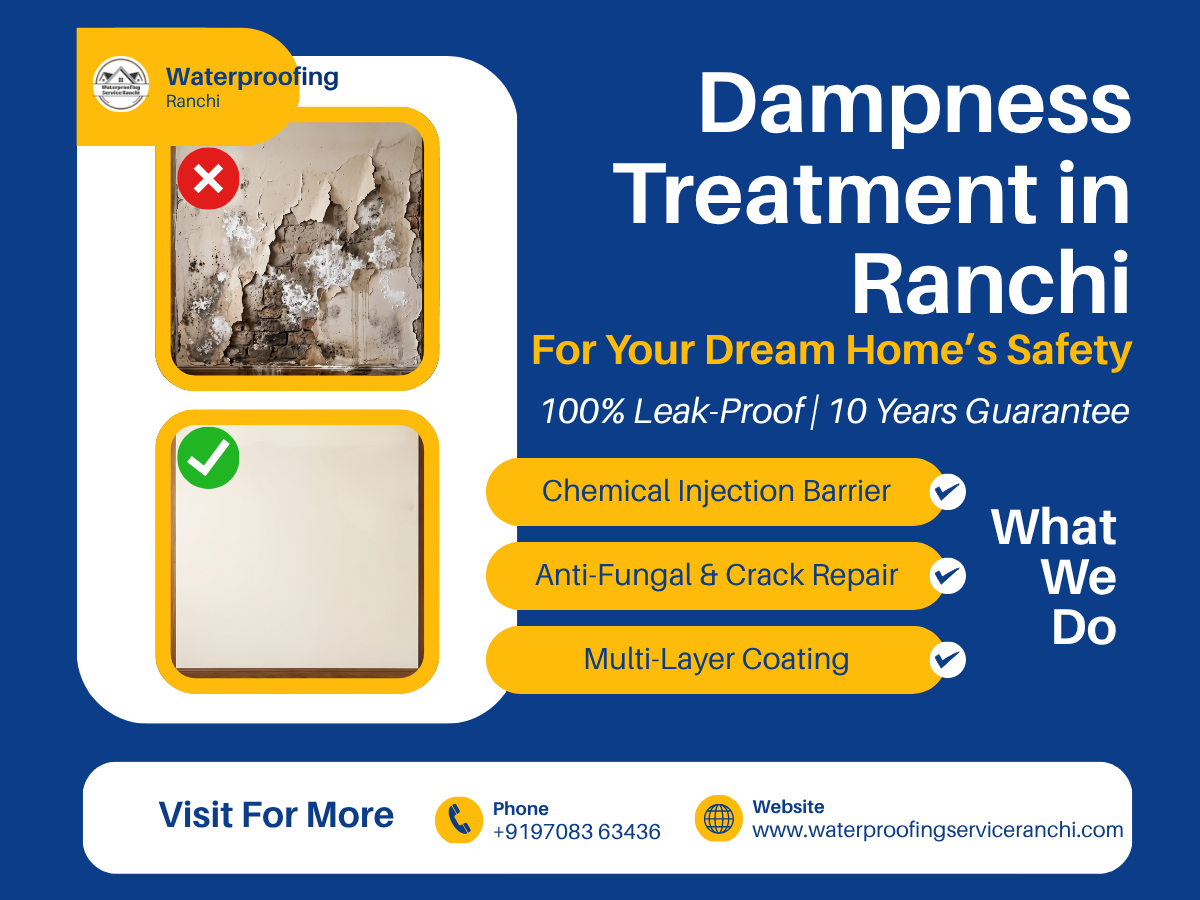
There is no experience more frustrating than spending a lot of money on high-quality home painting and then seeing ugly stains, bubbling of the paint from the wall, and presence of white powder on your walls after a few months.
In a city like Ranchi, with longer monsoon periods and an atmosphere of high moisture, wall dampness treatment in Ranchi has become one of the common household issues. Most homeowners use wallpaper, wall putty, or a fresh coat of paint to hide these spots, however, these temporary measures do not help because they do not solve the problem of moisture accumulation in the materials.
Wall dampness, when neglected, leads to weakening of buildings’ integrity and results in growth of harmful black mold.
This article aims to discover the reasons for wall dampness and find out how it can be detected and provide five engineering solutions to the problem.
Water finding its way through concrete and brick masonry is a gradual process. To treat the problem effectively, you must first understand where the water is coming from.
In heavy rainfall, external brick walls take in plenty of rain. However, if the outer plaster is cracked or the building is not covered with a protective waterproof covering, moisture will seep into such a structure and will come out in the form of wet patches on the internal walls.
Rising dampness takes place when moisture from the ground rises through the brick foundations through small holes (the process is called capillary action). This means that the DPC layer on the ground level is either absent or destroyed during building construction.
Water leakage from internal piping hidden in walls goes unnoticed. Even minor leakings from internal PVC bends, tile joints, and sanitation pipes can wet wall bricks to a degree of bringing about damp patches appearing in adjacent bedrooms or corridors.
In humid weather, warm vapor inside living rooms is getting condensed on cold walls. Over time, insufficient airing enables the dampness to settle and leads to development of dark mold.
Wall dampness is far more than an aesthetic eyesore; it poses genuine risks to your property and health:
Stopping wall dampness permanently requires professional intervention rather than temporary cosmetic patch-ups. Here are five technical solutions used by expert applicators:
To eliminate the problem of rising damp from the foundation, workers with experience drill special holes into the affected wall at the base. Next, they use special silicone or water-repellent chemicals. The chemical solution heats up and becomes a water-proof barrier that prevents the water from rising higher.
When outside walls absorb rainwater during rain storms, the use of waterproof and elastic materials for the outer wall results in the formation of a flexible and breathing material that works as a moisture barrier. Also, they can fill in tiny holes in the plaster and let the moisture out of the building.
If the internal wall suffers from mold, the only way to deal with it is to remove the plaster from the surface of the brick wall. Then the surface is treated with special anti-mould products and replastered with a silicone-cement material with latex additives before applying the final layer of plaster.
For controlling moisture that gets in from the bathroom and kitchen walls, you can apply epoxy grout for tile joints. This type of grout is different from the regular white cement since it is fully non-porous, chemical-resistant, and it stops water from getting behind the tiles on the floor and wall.
When handling the basement walls or underground rooms where digging from the outside is impossible, modern crystalline coatings are applied onto the interior concrete surfaces. The chemicals that are used are absorbed into the concrete structure and react with moisture, creating crystals that will block the water movement.
When you book a certified wall dampness treatment in Ranchi, professional technicians follow a disciplined execution protocol:
The dampness of the walls will not resolve itself; hiding wet patches behind decorative paints will prevent any possible damage from being repaired over time.
The best solution to the problem is to get rid of the source using technological chemical barriers and polymers.
If you are noticing peeling paint, white powder deposits, or damp smells in your rooms, do not wait for the next heavy rain. Schedule a professional site audit with verified experts in wall dampness treatment in Ranchi today!